
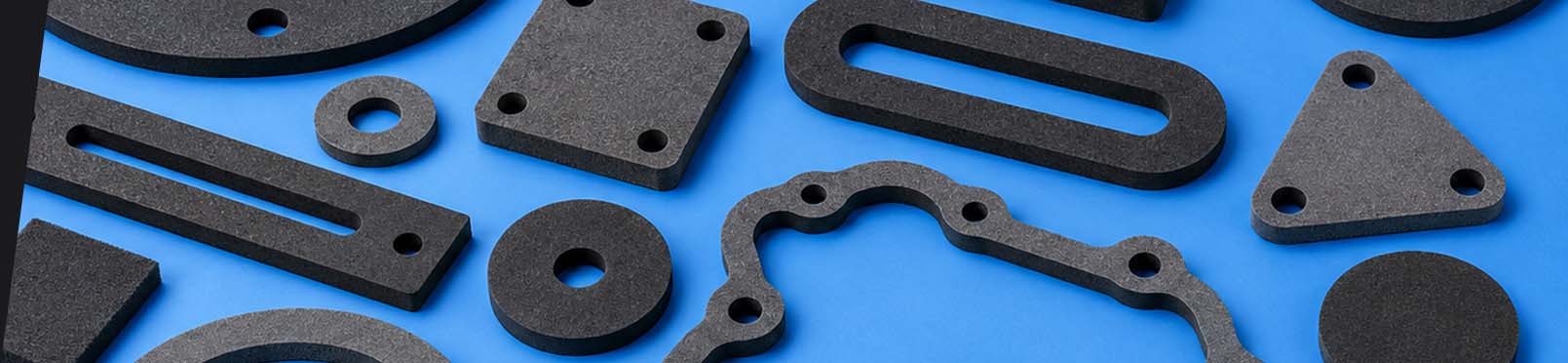
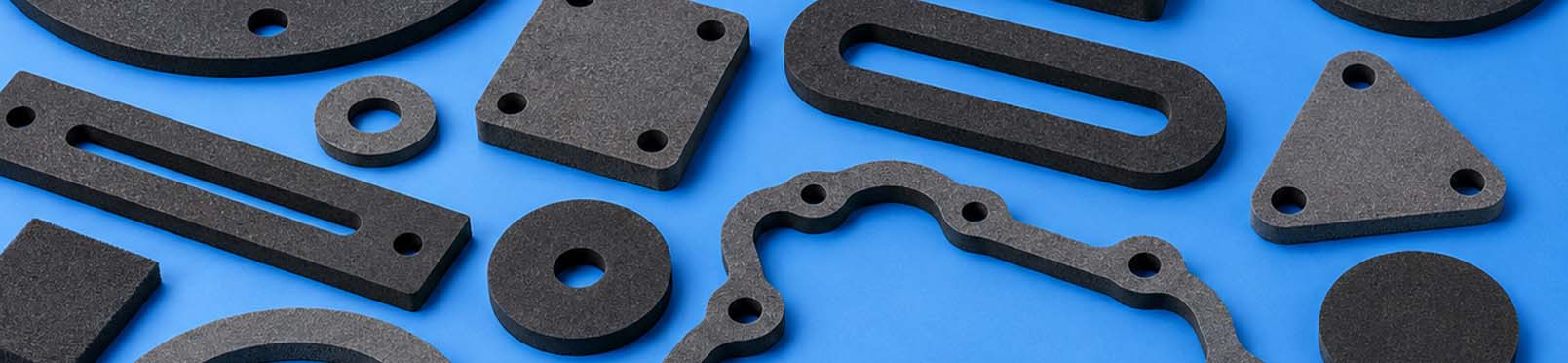
Bluemay Weston manufactures precision neoprene foam gaskets and seals to standard and bespoke specifications for customers across a wide range of industries. Using our punching and water jet cutting capabilities, neoprene foam components can be produced in quantities ranging from prototypes and small development batches through to high-volume production runs.
Neoprene foam is a flexible cellular material valued for its compressibility, weather resistance, moisture resistance and vibration-damping characteristics. Closed-cell neoprene foam can provide an effective environmental barrier when compressed, making it particularly suitable for equipment housings, electrical enclosures, HVAC systems, automotive assemblies and general industrial applications.


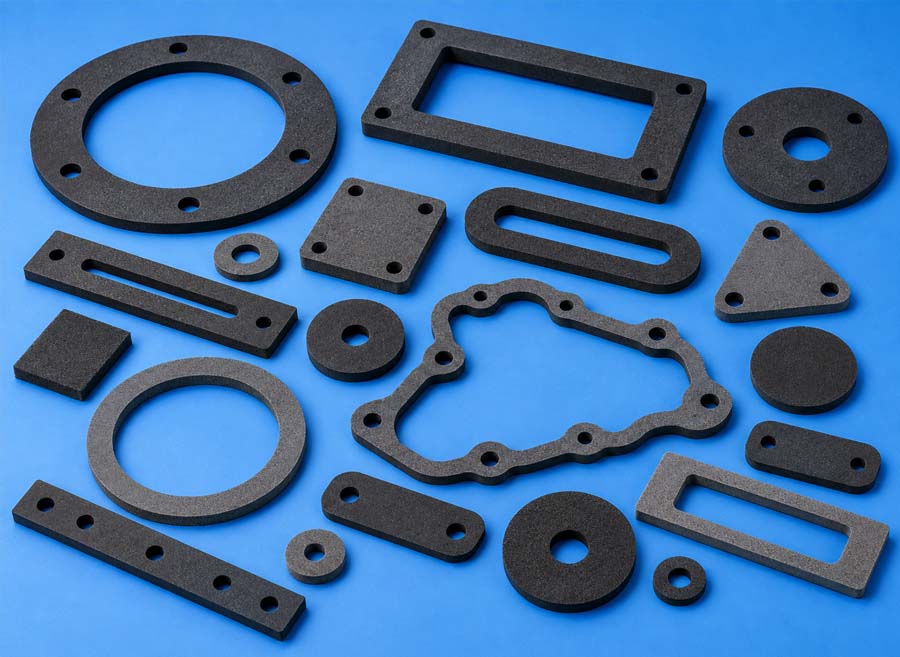
Neoprene foam gaskets and seals can be manufactured in circular, rectangular, frame-shaped and complex profiles to suit individual equipment and assembly requirements. Bluemay Weston produces components to customer drawings, dimensions or samples, allowing apertures, fixing holes, slots and other features to be incorporated within the finished part.
Using precision punching and water jet cutting, we can manufacture anything from prototypes and small development batches through to repeat production quantities. This flexibility enables bespoke neoprene foam gaskets and seals to be produced for applications requiring accurate profiles combined with compression, cushioning and environmental sealing performance.
Closed-cell neoprene foam compresses readily between mating surfaces, helping it accommodate small variations in component alignment and surface finish. When correctly compressed within an assembly, it can provide an effective barrier against air, dust, moisture and other environmental contaminants.
Neoprene also provides a useful balance of resistance to weathering, ozone, UV exposure and many general industrial environments. Compared with some other foam materials, neoprene can additionally offer useful resistance to oils and a range of chemicals, although suitability depends upon the particular foam grade and operating conditions.
The cellular structure of neoprene foam also provides good cushioning, vibration damping and noise reduction, allowing a gasket to protect components and isolate movement as well as provide environmental sealing.
Bluemay Weston manufactures neoprene foam gaskets and seals in a wide range of sizes, thicknesses, shapes and configurations. Components can be produced using existing tooling where suitable or manufactured to customer drawings, dimensions, samples and specifications.
Our extensive manufacturing experience enables us to supply neoprene foam gaskets and seals for applications requiring:
Neoprene foam gaskets and seals can also be supplied with self-adhesive backing where required, helping to locate and retain components during installation and assembly.
Components are manufactured at our facility in Devon and supplied to customers throughout the UK and worldwide.
Neoprene foam gaskets and seals are commonly manufactured for use in:
Neoprene foam gaskets and seals are commonly used for environmental sealing, dust and moisture exclusion, cushioning, vibration damping and noise reduction. Typical applications include electrical enclosures, equipment housings, HVAC systems, automotive assemblies, marine equipment and general industrial machinery.
Neoprene foam is a cellular form of chloroprene rubber. Closed-cell grades contain predominantly enclosed cells, creating a lightweight and highly compressible material with useful resistance to moisture, weathering and environmental exposure.
These characteristics make neoprene foam particularly suitable for gaskets, seals, cushioning pads and other components that need to compress between adjoining surfaces.
Neoprene foam compresses readily and can conform to variations between mating surfaces, helping to close gaps and maintain contact throughout the sealing area.
Suitable closed-cell grades can provide a barrier against air, dust and moisture whilst also cushioning adjoining components and reducing vibration.
Many neoprene foam materials used for gasket and sealing applications have a closed-cell structure.
Closed-cell foam generally absorbs less water and provides better resistance to air and moisture transmission than open-cell materials, making it particularly suitable for environmental sealing applications.
Closed-cell neoprene foam has low water absorption and can provide very good resistance to moisture when correctly compressed within a suitable assembly.
The overall sealing performance will depend upon factors including material grade, foam density, compression, joint design and operating conditions.
Yes. Neoprene provides good resistance to weathering, ozone, air and UV exposure, making suitable foam grades useful for external equipment and environmental sealing.
Typical outdoor applications include equipment housings, access panels, cabinets, marine equipment and automotive assemblies.
Neoprene generally provides better oil resistance than materials such as EPDM, making it useful in some industrial environments where occasional contact with oils may occur.
However, resistance depends upon the particular neoprene foam formulation, type of oil, exposure time and temperature. Compatibility should therefore be checked for applications involving continuous or demanding oil exposure.
Yes. The cellular structure of neoprene foam absorbs energy and helps isolate movement between adjoining components.
This makes neoprene foam useful where a gasket needs to combine sealing with vibration damping, cushioning or noise reduction.
Yes. Bluemay Weston can supply neoprene foam gaskets and seals with self-adhesive backing where required.
The adhesive can help position the component during assembly and hold it in place prior to final compression or fixing, simplifying installation in many enclosure, panel and equipment applications.
Both materials provide useful compressibility, weather resistance and environmental sealing.
EPDM foam is particularly well suited to prolonged weather, ozone and UV exposure, while neoprene foam offers a useful balance of weather resistance together with better resistance to certain oils and industrial environments. The most suitable material depends upon the fluids, temperatures and environmental conditions involved.
Neoprene foam can typically operate over a temperature range of approximately -30°C to +100°C, although the exact limits vary according to the particular foam grade, density and application.
Where temperature is critical, the specification of the individual neoprene foam material should be confirmed before manufacture.
Yes. Bluemay Weston manufactures bespoke neoprene foam gaskets and seals to customer drawings, dimensions, samples and specifications.
Components can be produced in simple circular and rectangular formats as well as complex frame shapes and profiles incorporating apertures, fixing holes, slots and other features.
Bluemay Weston manufactures neoprene foam gaskets and seals from sheet material using precision punching and water jet cutting techniques.
Punching provides an efficient manufacturing method for repeat production quantities, whilst water jet cutting is particularly useful for prototypes, lower-volume production, larger components and complex profiles where dedicated tooling may not be appropriate.
Bluemay Weston can manufacture neoprene foam gaskets and seals in quantities ranging from prototypes and small development batches through to high-volume production runs of many thousands or millions of components, depending on component size, foam specification and customer requirements.
